The Ultimate Guide to Warehouse Security Camera Systems in the GTA
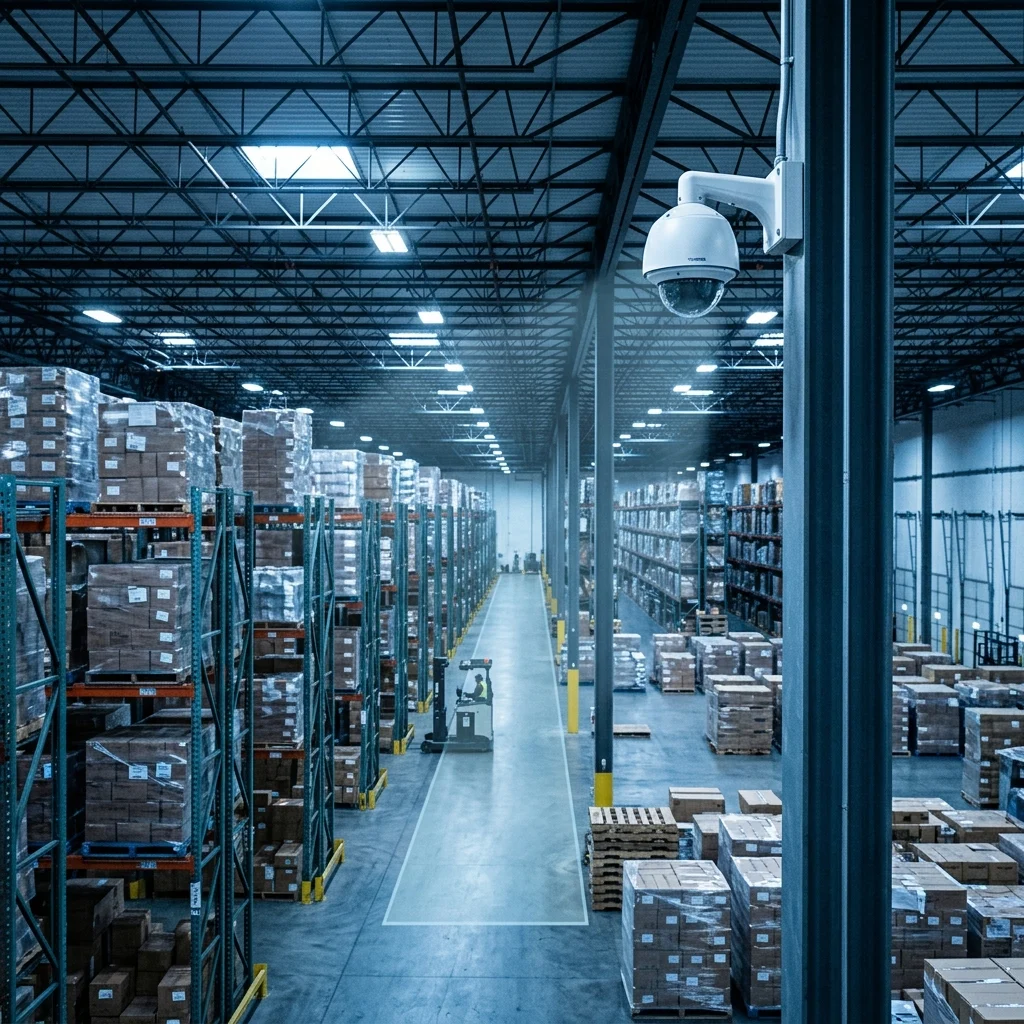
Securing a warehouse is entirely different from securing an office space or a retail store. The sheer scale of the environment—high ceilings, long narrow aisles, constant forklift traffic, and multiple shipping bays—creates a nightmare for standard security cameras. Deploying a commercial security camera installation in a logistics center requires strategic planning, not just mounting cameras in corners.
In this guide, we break down the specific components and strategies required to build an effective warehouse security camera system in the Greater Toronto Area.
1. Aisle Coverage: The "Corridor Mode" Solution
A standard 16:9 security camera mounted at the end of a long warehouse aisle captures a lot of useless footage: the shelving racks left and right, and very little detail of the floor where the actual activity is happening. You waste half your resolution and storage on static pallets.
The solution is Corridor Format (or Corridor Mode). This feature physically rotates the camera lens 90 degrees, turning the 16:9 widescreen image into a 9:16 vertical image. Suddenly, the camera focuses entirely on the depth of the aisle, ignoring the top of the racks. This maximizes your Pixels Per Foot (PPF) where it matters, allowing you to clearly identify faces and read barcode labels on boxes hundreds of feet away.
2. Shipping and Receiving Bays: High-Contrast Nightmares
Loading docks are the most critical point of vulnerability for inventory shrinkage. They are also optically challenging. When a bay door opens, sunlight floods in, silhouetting anyone standing inside against a bright white background. A cheap camera will just show a dark, unrecognizable figure.
To fix this, shipping bay cameras must have True Wide Dynamic Range (WDR) of at least 120dB. WDR actively balances the extreme brightness outside with the darker interior shadows, ensuring that faces and license plates remain perfectly clear regardless of the lighting contrast.
3. Exterior Perimeter and License Plate Recognition (LPR)
Warehouse yards in Brampton and Mississauga are frequent targets for overnight freight theft. Protecting the perimeter isn't just about seeing movement; it's about capturing actionable evidence.
A dedicated License Plate Recognition (LPR) or Automatic Number Plate Recognition (ANPR) camera should be installed at the primary gate. Unlike standard cameras, LPR cameras use specialized shutter speeds and intense infrared to filter out headlight glare and capture exact plate characters at 60 km/h, feeding them into a searchable database in your NVR.
4. AI and Proactive Analytics
Modern warehouse CCTV is no longer just for looking back at recorded footage after something goes missing. With AI-powered cameras, your system becomes a proactive guard.
- Line Crossing Detection: Draw a virtual perimeter fence around your trailer yard in the software. If a person or vehicle crosses that line between 10 PM and 6 AM, the system instantly triggers an alert to a live monitoring station.
- Hard Hat / Safety Gear Detection: Comply with WSIB standards by having your cameras flag workers who enter the active warehouse floor without a high-visibility vest or hard hat.
- Loitering Detection: Be alerted if a vehicle parks near a restricted shipping bay for more than three minutes.
5. Infrastructure: Fiber Optics and High-Bay Lifts
The biggest hidden cost of a warehouse camera installation is the cabling. Copper Ethernet (Cat6) has a maximum run length of 328 feet (100 meters). In a 100,000 sq ft logistics facility, you will easily exceed this limit.
Connecting distant cameras requires running fiber optic cabling to intermediate IDF cabinets (network switches acting as bridges) spread throughout the facility. This requires an installer competent in enterprise network architecture and fiber splicing, not just someone with a drill and a ladder. Furthermore, the installer must have certified technicians licensed to operate Scissor Lifts and Boom Lifts (Working at Heights certification) to legally and safely run conduit across 40-foot ceilings.
Putting It All Together
A well-designed warehouse security camera system is an exercise in precision engineering. Each zone—aisles, loading docks, perimeter, and high-bay ceiling runs—demands a specific camera type, lens configuration, and network infrastructure approach. The result is a system that doesn't just record incidents after the fact, but actively prevents them and provides the forensic clarity needed when something does go wrong.
When evaluating a deployment for your facility, prioritize installers who demonstrate familiarity with corridor mode configuration, enterprise fiber architecture, and certified working-at-heights procedures. These competencies separate a purpose-built logistics security system from a residential-grade patchwork.