The Invisible Doorman: How Video Intercoms Streamline Office Access
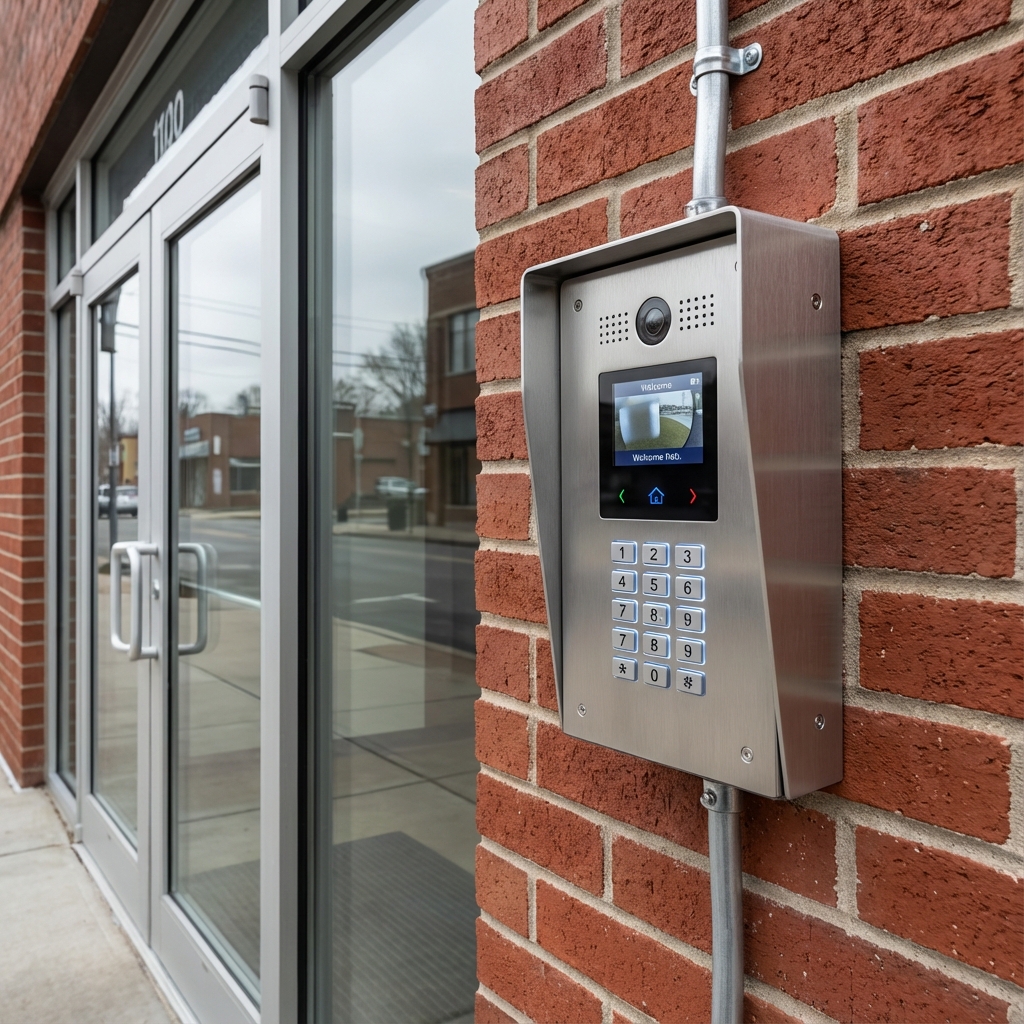
The traditional office lobby is undergoing a quiet revolution. The days of a dedicated receptionist sitting behind a mahogany desk from 9-to-5 are fading, replaced by flexible hours, hybrid work models, and leaner operations. Yet, the need to manage visitor access—securely and professionally—hasn't gone away. It has only become more complex.
Enter the "Invisible Doorman." This isn't a person, but a sophisticated ecosystem of smart video intercoms, cloud-based access control, and mobile integration. For businesses in Brampton and across the GTA, upgrading to a modern video intercom system isn't just about unlocking a door; it's about solving the "last meter" logistics problem of the modern workplace.
The Security Gap in Legacy Buzzers
Most older commercial buildings in Peel Region still rely on telephone-entry systems that date back to the 1990s. These systems pose significant security vulnerabilities:
- Blind Entry: When a buzzer rings, you have no way of verifying who is actually standing there. Is it the courier they claim to be, or a unauthorized individual tailgating in?
- Static PIN Codes: Many systems rely on a shared 4-digit code (like '1234') given to every delivery driver. These codes are rarely changed and often written on the intercom itself.
- No Audit Trail: If a theft occurs, legacy systems provide no record of who requested entry or exactly when the door was released.
Modern video intercoms eliminate these blind spots by providing high-definition visual verification for every single interaction, recording both the visitor's face and the audio conversation.
1. Visual Verification: The Trust Factor
The core advantage of a video intercom is evident in its name: Video. But it goes beyond just seeing a face. High-end systems from manufacturers like Axis, Verkada, or Aikivision (Hikvision) offer wide-angle, 180-degree views that show you the entire context of the entryway.
You can see if the visitor is alone or if a group is trying to crowd in behind them. You can check if they are carrying the tools or packages they claim to have. This visual context empowers your staff to make smarter, safer access decisions without ever putting themselves in physical proximity to a potential threat.
2. The "Receptionist" in Your Pocket
In a hybrid world, the person responsible for answering the door might not even be in the building. They could be working from home, at a client site, or in a meeting room on the 5th floor.
Modern IP intercoms ring directly to a mobile app on a smartphone or a desktop client. This "Direct-to-Mobile" functionality changes the game:
Scenario: The After-Hours Emergency
It's 8:00 PM. A contractor arrives to fix a leaking pipe, but the office is locked. Instead of driving back to the office to let them in, the office manager receives a video call at home. They verify the contractor's identity, discuss the issue via two-way audio, and unlock the door remotely with a single tap. Problem solved in seconds.
3. Streamlining Logistics with QR Codes
Delivery management is a major pain point. Packages left outside are stolen; packages that can't be delivered result in "Attempted Delivery" slips and operational delays.
Advanced video intercoms integrated with access control allow you to issue Temporary Visitor Passes.
- Scheduled Access: Send a QR code to a cleaning crew that only works between 6 PM and 9 PM on Tuesdays.
- One-Time Use: Generate a single-use PIN for a courier. Once used, it is instantly deactivated.
- Vendor Management: For recurring vendors (like water delivery), issue a credential that works only during business hours, removing the need to buzz them in manually every week.
4. Cloud Management vs. The "Server Room"
Legacy systems often required a dedicated PC in a dusty server room to manage the database. If that computer crashed, you couldn't update names or add new key fobs.
Cloud-based management puts the control panel in your web browser. This is critical for Property Managers overseeing multiple locations:
- Instant Updates: When a tenant moves out, you remove them from the directory in one click. Their name disappears from the scroll list, and their mobile app access is revoked instantly.
- Global Directory: Manage 10 different buildings from a single dashboard. Push global updates (like holiday schedules) to all sites simultaneously.
- Over-the-Air Updates: Firmware updates are pushed automatically, ensuring your system is always patched against the latest cyber threats without a truck roll.
5. ROI: The Cost of a Physical Guard
Let's talk numbers. A manned security guard or concierge desk can cost anywhere from $40,000 to $80,000+ per year in salary and benefits. For many Class B and C commercial buildings, or smaller residential condos, this expense is hard to justify.
A video intercom system essentially acts as a Virtual Concierge. For a one-time installation cost (often less than a few months of a guard's salary) and a small annual software license, you get 24/7 coverage.
"We've seen property management firms reduce their operational overhead by 15-20% simply by switching from manned desks to intelligent video entry systems for off-peak hours."
6. Integration with the Wider Ecosystem
A video intercom shouldn't be an island. The true power unlocks when it integrates with your other security layers:
- NVR Integration: The camera on the intercom feeds directly into your CCTV recorder (NVR), recording 24/7 footage just like any other security camera.
- Access Control: It acts as a card reader. Employees don't need to use the app; they just tap their fob or phone against the reader to enter.
- Elevator Control: For high-rises, granting entry at the front door can automatically unlock the elevator for the specific floor the visitor is going to.
Future-Proofing Your Entrance
Technology moves fast. The systems we install today are AI-ready. Facial recognition features (where permitted) can allow for "face-as-credential" access for VIP staff. Voice assistants and touchless wave-to-unlock gestures are becoming standard hygiene features.
By investing in an IP-based structured cabling backbone for your intercom today, you are laying the infrastructure for the smart building innovations of tomorrow.
Is Your Building Ready for an Upgrade?
If your building still uses a blurry monochrome camera or a telephone line that requires a landline subscription, it's time to evaluate the "Invisible Doorman." At Sewak Security, we specialize in retrofitting older buildings with modern IP infrastructure, often re-using existing cabling where possible to keep costs down.
Secure your lobby, streamline your deliveries, and impress your tenants. Contact our Brampton team today for a free site assessment.