Security Camera Laws in Ontario: What Property Owners Need to Know
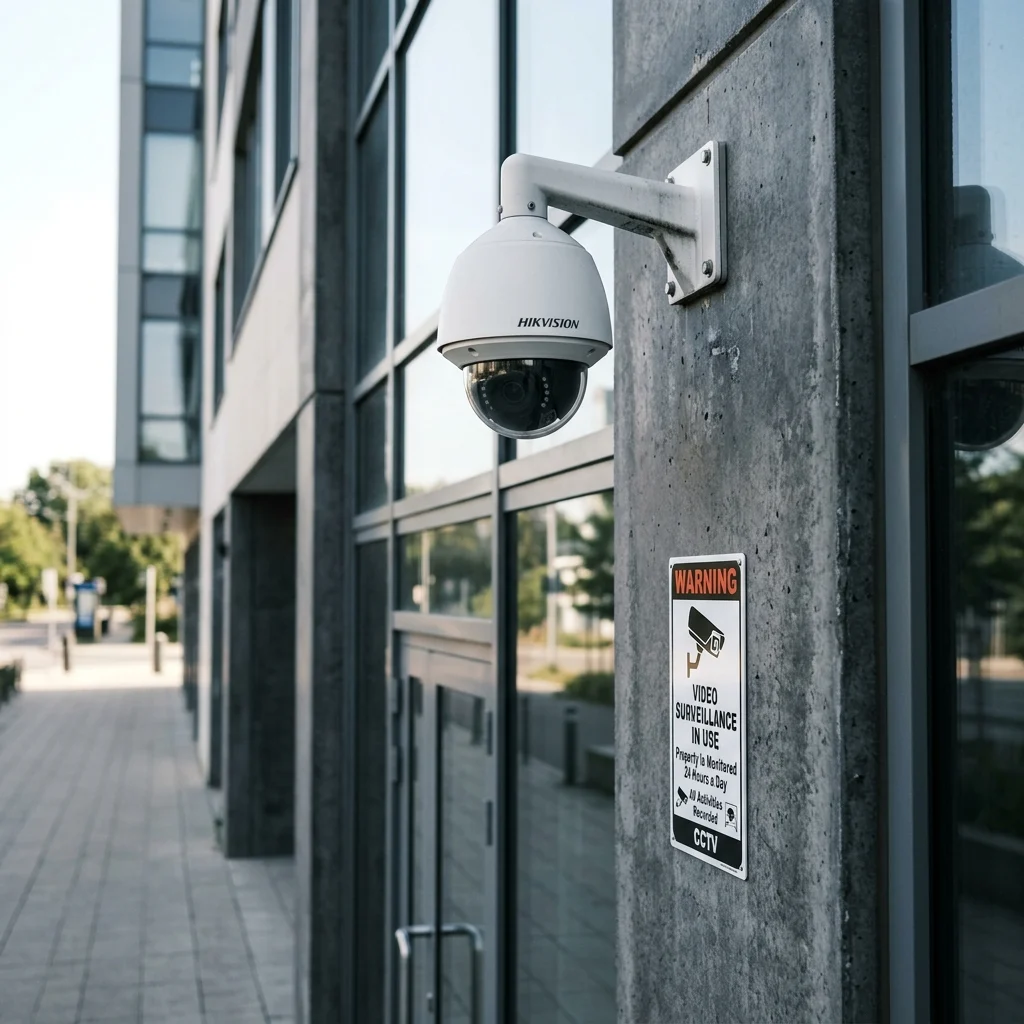
When people ask about the legality of security cameras in Ontario, they often expect a straightforward answer. The reality is more layered. There is no single "CCTV law" in this province. Surveillance is governed by a combination of federal privacy legislation, Ontario statutes, the Criminal Code, and common law privacy principles — each of which applies differently depending on who you are and who you are recording.
The Federal Framework: PIPEDA
For private sector organizations in Ontario — businesses, landlords, property management companies, and similar entities — the primary federal privacy legislation is the Personal Information Protection and Electronic Documents Act (PIPEDA). Ontario does not have its own private sector privacy law (unlike Quebec, British Columbia, and Alberta, which have their own provincial equivalents), so PIPEDA applies by default.
Under PIPEDA, video surveillance in a commercial context is considered collection of personal information when it captures identifiable individuals. This means organizations are required to:
- Have a legitimate purpose — theft prevention, access control, and safety documentation are generally accepted; surveillance without a stated purpose is not.
- Collect only what is necessary — camera placement should be proportionate to the identified risk. A wide-angle camera pointed at a public street captures more than necessary for most business purposes.
- Notify individuals through signage — notice through posted signs serves as the functional equivalent of consent disclosure in surveillance contexts. The Office of the Privacy Commissioner of Canada (OPC) publishes specific guidance on effective signage.
- Limit retention — footage should be retained only as long as necessary for its purpose, then securely deleted. Thirty days is a widely adopted standard, though the law does not specify a fixed period.
- Provide access to recordings — individuals may request footage in which they appear under PIPEDA's access rights provisions, subject to certain exceptions.
Public Sector: FIPPA and MFIPPA
Ontario government institutions and broader public sector organizations — including provincial ministries, school boards, hospitals, and municipalities — fall under the Freedom of Information and Protection of Privacy Act (FIPPA) and its municipal equivalent, MFIPPA, rather than PIPEDA. These statutes impose similar transparency and purpose-limitation requirements but are administered by the Information and Privacy Commissioner of Ontario (IPC) rather than the federal OPC.
If you operate in a public sector context, the IPC has published specific guidance on workplace surveillance and video monitoring that should be reviewed before any new camera system is deployed.
The Criminal Code: Where the Hard Lines Are
Regardless of any privacy statute, the Criminal Code establishes absolute limits on surveillance activity in Canada.
Section 162 (Voyeurism) makes it a criminal offence to observe or record a person in a place where they have a reasonable expectation of privacy — and to do so for a sexual purpose, or to record their genital organs or anal region. In practice, this means cameras in washrooms, change rooms, locker rooms, or any space where individuals reasonably expect not to be observed are strictly prohibited and constitute a criminal offence.
Section 184 (Interception of Private Communications) makes it illegal to record private audio conversations without the consent of at least one party to the conversation. Security cameras in Ontario are typically installed without audio capture for this reason. Adding a microphone to a security camera in a commercial environment without a properly structured consent and notice framework creates significant legal exposure.
What You Can and Cannot Record
In practical terms, the following principles apply for most Ontario property owners and businesses:
- Your own property exterior — generally permissible. Entry points, parking areas, and building perimeters are commonly covered for legitimate security purposes.
- Commercial interior spaces — permissible with appropriate signage. Sales floors, lobbies, and storage areas are commonly monitored. Break rooms and washrooms are not.
- Neighboring property — cameras should not be positioned to deliberately capture footage of areas that are exclusively on a neighboring property. Accidental overlap of a camera's field of view is a grey area; intentional targeting of a neighbor's space is not.
- Public sidewalks and streets — grey area. A camera covering a building entrance will inevitably capture some public space. The OPC's guidance suggests this is generally acceptable as incidental capture, provided the primary purpose is protecting the property rather than general surveillance of the public.
- Employee areas — workplace surveillance is specifically governed under PIPEDA. Employees have a reduced but not eliminated expectation of privacy in a workplace. Employers are expected to have a written surveillance policy, notify employees before surveillance begins, and limit collection to what is genuinely necessary.
Condominiums and Multi-Tenant Buildings
Condominium corporations in Ontario operate under the Condominium Act, 1998. Boards that deploy surveillance systems in common areas are required to disclose those systems to unit owners through the corporation's records and, typically, through notices on the relevant areas. Footage from condominium common areas is subject to access requests and must be managed under a clear retention and access policy.
Individual unit owners do not have the authority to install cameras in common areas — only the board does. Cameras that capture other units or common areas from an individual unit's vantage point can generate noise complaints and PIPEDA complaints.
Practical Compliance Checklist
For most Ontario property owners operating security cameras in a commercial context, basic compliance involves:
- A documented, stated purpose for each camera's placement
- Signage at all entry points to areas under surveillance, meeting OPC's notification standards
- A written surveillance policy covering purpose, retention periods, access rights, and who can review footage
- Retention limits (typically 30 days; longer retention requires documented justification)
- No cameras in washrooms, change rooms, or any space with a reasonable expectation of privacy
- No audio recording without specific consent framework
- A designated person responsible for privacy compliance and access requests
The OPC and IPC both publish free guidance documents specifically on video surveillance — they are worth reading directly if your situation is at all complex. When in doubt, a privacy lawyer familiar with PIPEDA can review a proposed deployment in an hour and flag any significant issues before they become complaints.