Alarm Systems in the GTA: What Every Property Owner Should Understand
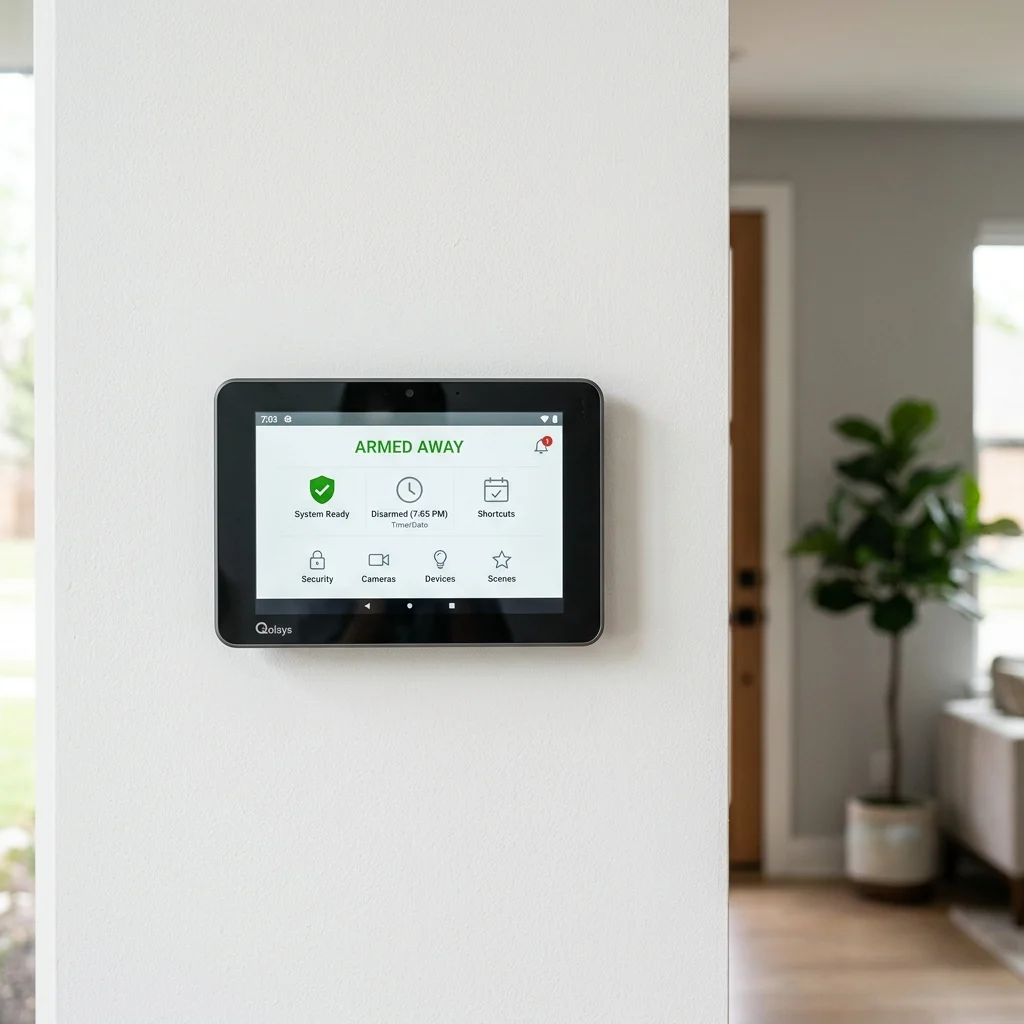
When most people picture a security alarm, they imagine a keypad on the wall and a siren above the door. That's still part of the picture — but modern intrusion detection has moved well beyond that. Before choosing an alarm system for your home or business, there are a few things worth understanding that installers don't always explain upfront.
The False Alarm Problem Is Real — and It Has Legal Consequences
Brampton, Mississauga, and Toronto all have registered false alarm bylaws. The details vary by municipality, but the pattern is consistent: after a set number of unverified police dispatches per year — typically two or three — property owners begin receiving fines. Repeat offenders can be removed from police response lists entirely.
The root cause is usually the sensor technology itself. Traditional passive infrared (PIR) motion detectors respond to heat and movement — and they can't distinguish between a person and a shifting shadow, an HVAC vent cycling on, or a pet moving through the room. In environments with temperature fluctuations or irregular foot traffic, false triggers are common.
The industry has responded with two approaches: dual-technology sensors (combining PIR with microwave detection to require two simultaneous triggers before activating), and AI-based video verification, where a motion trigger cross-references camera footage before an alert is sent. Video verification in particular has dramatically reduced false dispatch rates in commercial settings.
How Alarm Systems Affect Your Insurance Premium
Most Canadian property insurers offer discounts for monitored alarm systems — typically in the range of 5–15% for residential, and potentially higher for commercial depending on the policy and monitoring type. The key distinction insurers make is between a local alarm (a siren that activates on-site but notifies no one automatically) and a monitored system connected to a central station.
For commercial properties, some insurers are now specifying ULC-listed monitoring — meaning the central monitoring station meets Underwriters Laboratories of Canada standards for response time, redundancy, and staffing. Worth asking your broker specifically whether your policy requires ULC certification, because not all monitoring providers hold it.
Video-verified monitoring is also beginning to appear as an insurance incentive in commercial policies, particularly for high-theft-risk businesses like cannabis retailers, jewellers, and pharmacies. If your insurer is asking for enhanced security measures, it's worth asking whether video verification satisfies that requirement.
Understanding the Main Panel Options
The alarm panel is the brain of the system — it receives signals from sensors, communicates with the monitoring station, and manages arming and disarming. The three families you'll encounter most often in the Canadian market are DSC, Honeywell (now Resideo), and Ajax Systems.
DSC PowerSeries Neo
DSC has been a Canadian industry standard for decades. The PowerSeries Neo is a hardwired system with strong integration capabilities — it communicates over IP and cellular, supports a wide range of third-party sensors, and has a mature installer ecosystem. For new construction or buildings where running wire is practical, it's a proven and well-supported option.
Honeywell / Resideo VISTA Series
The VISTA series is similarly well-established, particularly in the residential market. It's compatible with a large number of Z-Wave and wireless sensors through the AlarmNet platform, and many monitoring stations are already configured to receive its signals. If you have an older Honeywell system that needs upgrading, staying within the ecosystem often simplifies the migration.
Ajax Systems
Ajax is a newer entry — a Ukrainian manufacturer that has gained significant traction in Europe and is growing in North America. What makes it different is that it's entirely wireless and built around cellular communication from the ground up. There's no reliance on a landline or internet connection; the hub communicates directly via LTE with battery backup. For retrofit environments where running wire is impractical, or for sites that need rapid deployment, Ajax is worth serious consideration. The app-based management and tamper detection are also genuinely well-designed.
The tradeoff is ecosystem maturity — Ajax is newer, so third-party integrations and installer familiarity in Canada are still developing. It's an excellent system, but confirm your chosen installer has hands-on experience with it before committing.
Standalone vs. Integrated Systems
An alarm system on its own detects and alerts. When it's integrated with cameras and access control, it also responds and records.
The most useful integrations in practice:
- Alarm + Camera: When a zone is triggered, the NVR or camera system automatically bookmarks that moment in the recording. This makes incident review dramatically faster — instead of scrubbing through hours of footage, investigators go directly to the flagged clip.
- Alarm + Access Control: Arming and disarming is tied to credential use — the last credentialed person out arms the system, and the first credentialed person in disarms it. This eliminates shared PIN codes and the liability that comes with them.
- Alarm + Video Monitoring: Central station operators receive a live camera feed when a zone trips, allowing them to visually verify whether a dispatch is warranted before calling police. This is the most effective way to reduce false alarm fines.
Questions Worth Asking Before You Sign Anything
Before agreeing to any alarm installation or monitoring contract:
- Is the monitoring station ULC-listed? What is the guaranteed response time?
- What happens if the internet goes down — does the panel have cellular backup?
- Who owns the equipment if you cancel the contract?
- Is the panel a proprietary system that locks you to one monitoring provider, or can it be reprogrammed?
- Does the system integrate with your existing cameras or access control?
- What is the process for updating alarm codes when an employee leaves?
A reputable installer will have straightforward answers to all of these. If any of them are met with deflection or vague language, that's worth paying attention to.